Torn between two West Jordan favorites and not sure which one actually fits your day to day? Choosing a neighborhood is about more than a floor plan. It is about the rhythms of your commute, the amenities you will use, and how the HOA aligns with your budget and lifestyle. In this guide, you will learn the key differences between Terraine and Daybreak, the tradeoffs to consider, and a simple plan to decide with confidence. Let’s dive in.
Quick take: who each fits
- If you want a master-planned setting with robust amenities and built-in community programming, Daybreak tends to check that box.
- If you prefer a smaller neighborhood feel with simpler HOA structures and a focus on nearby city amenities, Terraine may be a match.
- If you are price sensitive, compare total monthly cost, not just list price. Factor HOA fees, utilities, and any special assessments.
Community overview
Daybreak at a glance
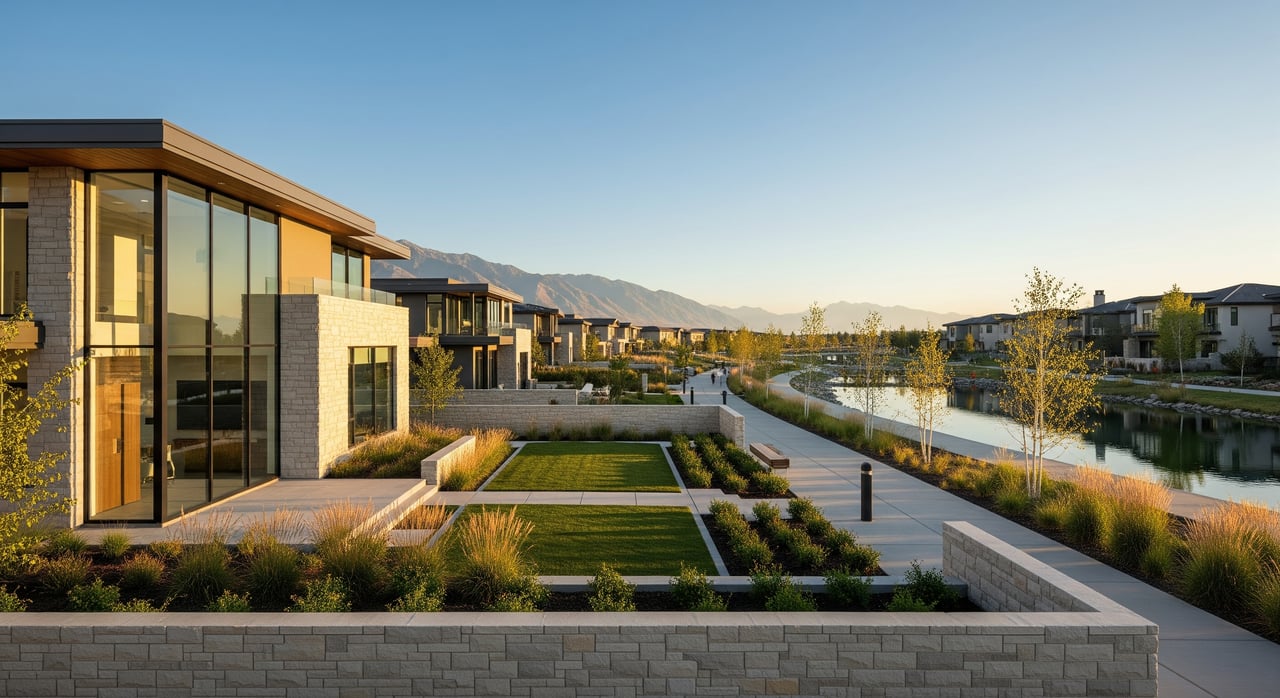
Daybreak is a large master-planned community in South Jordan, adjacent to West Jordan. It offers a wide mix of homes, including single-family, townhomes, condos, and apartments. Amenities commonly associated with Daybreak include Oquirrh Lake, trails, parks, pools, and a mixed-use town center. The area is served by UTA TRAX, which connects to downtown Salt Lake City and the airport through transfers.
What this means for you: You can live near everyday conveniences and recreation, with options that range from higher-density homes near shops to larger single-family parcels in outer phases.
Terraine at a glance
Terraine is a smaller, newer subdivision within West Jordan. Details like builder, home types, HOA rules, and on-site amenities vary by phase and should be confirmed for specific listings. Many buyers evaluate Terraine for its neighborhood feel, proximity to West Jordan services, and potential value relative to larger planned communities.
What this means for you: Expect a more traditional subdivision experience. Plan to confirm the exact boundaries, HOA fees, and amenity list for the address you are considering.
Housing and price considerations
Without current MLS data, it is smart to compare the following side by side for each area you are considering:
- Home types and sizes: single-family, townhomes, condos, typical square footage, and bedrooms.
- Lot sizes and outdoor space: yard depth, garage placement, and privacy.
- New construction vs resale: builder inventory, warranty coverage, and timelines.
- Value metrics: recent sold prices, price per square foot, days on market, and months of supply.
- Builder reputation: customer service, energy features, and finish levels.
A practical tip: ask for a recent MLS snapshot covering the last 6 to 12 months that shows median sold price, price per square foot, and average days on market for Daybreak and Terraine. Use that to guide offers and expectations.
Lifestyle and amenities
Daybreak lifestyle
Daybreak’s master plan centers on amenities and access. Oquirrh Lake, a network of trails and parks, multiple pools, fitness and gathering spaces, and a town center create an active, programmed feel. Homes near commercial cores can offer strong walkability and social energy. Farther-flung blocks often deliver more space and quieter streets.
What to check:
- Lake access rules and guest policies.
- Pool availability, fitness facilities, and community event calendars.
- Noise and traffic patterns near commercial areas.
Terraine lifestyle
As a smaller subdivision, Terraine’s on-site amenities are likely focused on pocket parks and neighborhood sidewalks, with daily conveniences reached by a short drive. Nearby public parks, regional trails, and West Jordan retail nodes tend to round out the lifestyle.
What to check:
- Any planned or existing community parks or playgrounds inside the subdivision.
- Sidewalk connectivity and distances to nearby grocery, coffee, daycare, and medical services.
- Access to regional trails, including the broader Jordan River Parkway network.
Commute and transit
Daybreak commute picture
Daybreak is served by UTA TRAX, which connects riders to downtown Salt Lake City and, with transfers, the airport. This can reduce car dependence for some commutes. If you work along the Wasatch Front tech corridor, evaluate travel time by both rail and car during your typical hours.
What to test-drive:
- Door-to-door time to downtown Salt Lake City and key job centers during peak hours.
- Parking availability at TRAX and first/last-mile options.
- Access routes to major arterials for weekend travel and airport runs.
Terraine commute picture
Terraine’s commute feel depends on its exact location within West Jordan and proximity to major roads like Bangerter Highway and I-15 corridors. Without rail inside the subdivision, most residents rely on driving or bus connections to reach work and school.
What to test-drive:
- Peak-hour travel to downtown, the University area, Silicon Slopes, and the airport.
- Morning and evening traffic patterns at the nearest highway interchanges.
- Bus stops and service frequency, if you expect to use transit.
Schools and childcare
Both Daybreak and Terraine addresses are generally served by schools in the local district. Because boundaries can change, confirm assignments by address directly with the district before you make an offer. Keep your notes date-stamped, and ask about any planned boundary reviews or new school openings that could affect future assignments.
What to verify:
- Current elementary, middle, and high school assignments by address.
- Program options and capacity updates from the district.
- Proximity to preschools and childcare centers you plan to use.
Use only neutral, factual sources for school facts, and visit campuses or speak with the district if school details are central to your decision.
HOA, CC&Rs, and monthly costs
Daybreak HOA snapshot
Daybreak commonly includes a master HOA and, in some cases, sub-associations for specific product types. Expect design guidelines and approval processes for exterior changes. Fees help support amenity maintenance, which can be a benefit if you plan to use the facilities often.
What to request:
- Current HOA fee amounts, what is included, and billing frequency.
- Design control rules, exterior change approvals, parking policies, and holiday decoration guidelines.
- Any rental restrictions, rental caps, or minimum lease terms.
- A record of special assessments and any planned fee changes.
Terraine HOA snapshot
Terraine’s HOA structure, if present, varies by builder and phase. Some smaller subdivisions have lower fees because they maintain fewer private amenities, but rules and services differ.
What to request:
- Current HOA fee schedule and coverage, including landscaping or snow removal.
- CC&R highlights, rental rules, and architectural approvals.
- Any pending assessments or known maintenance obligations.
When comparing neighborhoods, focus on total monthly housing cost. Add mortgage, property taxes, HOA, utilities, and an allowance for maintenance or assessments.
Resale outlook
In general, features that tend to support long-term value include proximity to transit, access to daily retail, strong trail and park networks, and consistent HOA maintenance. In a master-planned setting like Daybreak, amenity density and walkable retail can help demand. In a smaller subdivision like Terraine, lot size, builder quality, and neighborhood stability can be key drivers.
Ask your agent for a 3 to 5 year view of median prices and days on market for both areas. If Terraine is newer with limited sales history, use nearby comparable subdivisions and builder pricing to gauge trend and resale potential.
How to choose: a simple decision framework
- Lifestyle first: List your non-negotiables, like daily walkability, a neighborhood pool, or a larger yard.
- Commute second: Test your commute at the exact hours you expect to drive or ride.
- Cost clarity: Compare total monthly cost, not just price per square foot.
- Rules fit: Read the CC&Rs, especially for parking, rentals, and exterior changes.
- Resale lens: Favor locations near transit, parks, and retail, with a strong maintenance profile.
Touring checklist
Daybreak
- Walk from the home to the nearest park or town center, time the walk both day and night.
- Listen for traffic and activity levels near commercial zones.
- Visit the pool or fitness areas, ask about guest policies and seasonal hours.
- Confirm TRAX access, parking, and service frequency at your commute times.
Terraine
Drive to the nearest grocery, coffee, and medical services, note travel times.
Walk the subdivision for sidewalk coverage, pocket parks, and street lighting.
Ask for builder warranty details and recent HOA meeting notes.
Confirm school assignments by address with the district and note any planned changes.
Next steps
Every buyer’s equation is different. The best choice is the one that matches your lifestyle, commute, and budget with the fewest compromises. If you want current MLS data, HOA documents, and a side-by-side cost comparison for specific homes in Daybreak and Terraine, reach out. Jason J. Real Estate can pull the right numbers, schedule on-the-ground tours, and help you decide with clarity.
FAQs
What is the biggest difference between Daybreak and Terraine?
- Daybreak is a large master-planned community with extensive amenities and mixed-use elements, while Terraine is a smaller West Jordan subdivision where specifics like HOA scope and amenities vary by phase.
How do HOA fees typically compare between the two?
- Daybreak fees often reflect broader amenities and common area maintenance, while Terraine’s fees, if present, usually depend on what the subdivision maintains; request current schedules for each address.
Is Daybreak a good choice for commuters who prefer transit?
- Daybreak is served by UTA TRAX, which connects to downtown Salt Lake City and the airport through transfers; test your route and timing during peak hours before deciding.
How do I confirm the correct schools for a home in either area?
- Contact the local school district with the exact property address, and ask for current assignments plus any planned boundary updates; verify before you write an offer.
Are there rental restrictions I should know about?
- Many communities have CC&Rs that limit or structure rentals; request the current governing documents for the specific property, including any rental caps or minimum lease terms.
Do both areas offer new construction and resale options?
- Daybreak commonly offers both new construction and resale across multiple product types; Terraine’s mix depends on active builders and completed phases, so check current inventory with your agent.