Promontory has always sold two things at once: a home and a membership. What's changed in 2026 is that the club now sells a third thing, and it's competing with the first.
That third thing is a fixed-cost, fixed-timeline custom build delivered by the community's in-house builder. For buyers who assumed a Promontory search meant scrolling resale listings until something felt right, the math has shifted. For sellers, the ground under their pricing strategy has moved a few feet without anyone announcing it.
The number that reframes the community
Promontory closed more than $637 million in home and homesite sales in 2025, a 21 percent lift over 2024, and accounted for roughly 34 percent of all home and homesite sales in Park City that year, per the community's own reporting through Globe Newswire in March 2026. The first half of 2026 kept the pace: 40 closings totaling $254.3 million, a median sale price of $5.65 million, three closings above $10 million, and a high of $25 million at Pinnacle at Promontory, according to Park City Board of Realtors and Domus Analytics data compiled in mid-2026.
Read those numbers the usual way and you get "hot luxury community." Read them against the community's build-out status and you get something more interesting.
Promontory sits on 7,200 acres with 1,924 total homesites and 965 homes built, which means the community is still selling raw land at the same time it's setting resale records. Those two markets are now linked by a single price sheet.
What the design center actually changes at the closing table
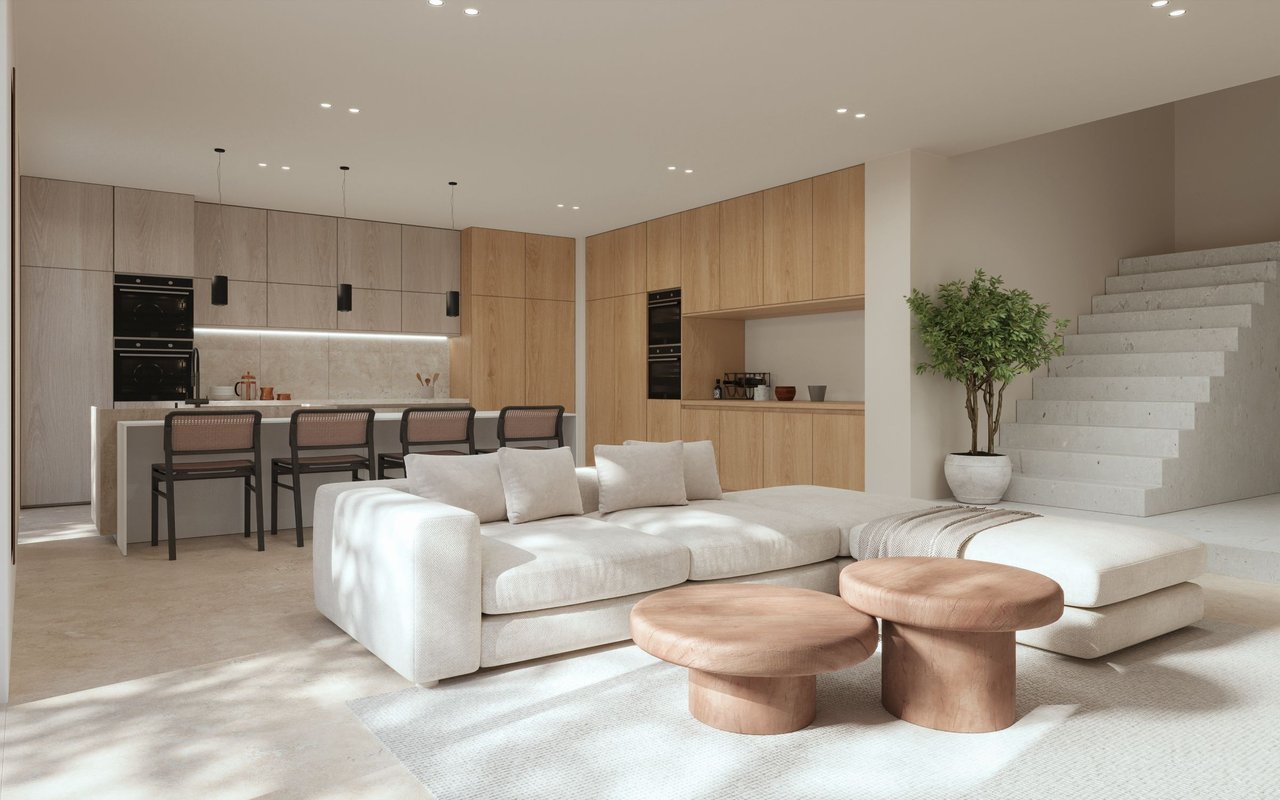
In January 2026, Promontory opened a new design center for its members, the anchor of a program called Promontory HOMES. The pitch is straightforward: 29 pre-engineered plans across Estates, Villas, and Portfolio tiers, interiors coordinated through Alder and Tweed, and contracts that lock cost and schedule up front. The community says builds finish months or years faster than a comparable custom process.
That program does four things to the resale market inside the gates:
- Sets a ceiling on cost-plus resales. If a buyer can price a new build to the dollar before breaking ground, a resale asking above replacement cost has to justify itself with something the builder can't deliver: mature landscaping, a specific view corridor, a lot that's no longer available, or a finish package that a Portfolio plan won't match.
- Shortens the "wait for the right listing" clock. Buyers who used to sit on the sidelines for 12 to 18 months waiting for the right resale now have a defined alternative with a delivery date attached. That reduces the pressure to overpay on a compromise resale.
- Turns homesites into direct competition for finished homes. Roughly 1,000 homesites remain in the community. Every one of them is now paired with a builder, a plan set, and a fixed price. A finished home three doors down has to price against that combined package.
- Rewards sellers who can tell a story the builder can't. The homes moving above $10 million in H1 2026 weren't generic large houses. They were specific: Pinnacle lots, ridge sites, architectural distinction. That premium is real, and it's separating from the middle of the market.
Reading H1 2026 through this lens
The community's mid-year data gets more useful when you group it by what the in-house builder can and cannot replace.
| H1 2026 Promontory metric | Figure |
|---|---|
| Closings | 40 |
| Total volume | $254.3M |
| Median sale price | $5.65M |
| Closings above $5M | 23 |
| Closings above $10M | 3 |
| High sale (Pinnacle at Promontory) | $25M |
Twenty-three of forty closings landed above $5 million, and only three cleared $10 million. That middle band, roughly $5 million to $10 million, is exactly where a Promontory HOMES Estate or a well-sited Villa build is most likely to compete on a like-for-like basis. Sellers pricing into that band are no longer just competing against other resale listings. They're competing against a builder who can quote a firm number on a Tuesday.
Above $10 million, the picture flips. Those homes trade on scarcity: a specific lot, a specific architect, a view that isn't being replicated on the remaining inventory. That's where the community's 60 percent open-space designation and its finite ridge sites become the actual asset.
Where a resale still wins
The in-house program is a genuine option, not a universal answer. Several buyer priorities still pull toward existing homes:
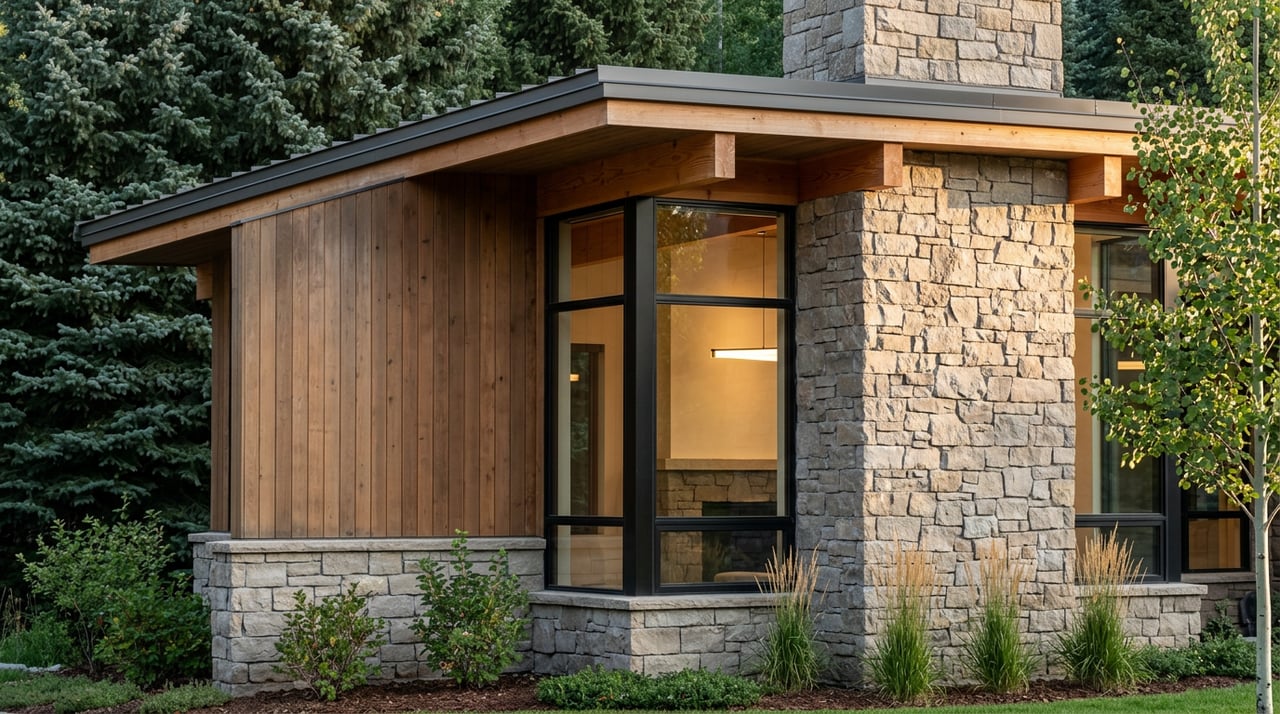
- Mature siting. Aspens, spruces, and established grading don't come with a new build. On a 7,200-acre parcel that only broke ground in 2001, that matters.
- Access to specific amenities without a wait. A finished home means a member card, a locker at the private ski lodges at Deer Valley Resort and Park City Mountain, and immediate access to the reimagined Village Clubhouse, the new Spa at Promontory with its ten treatment rooms and hydrotherapy circuit, The Hills clubhouse, The Shed family fun center, the Beach Club, the equestrian center, and the community's six restaurants. A build pushes that timeline out by the length of construction.
- Lots that are no longer for sale. Some of the strongest positions in the community were platted early and are held by second-owner households. When one lists, it lists once.
- Furnishings and finishes already dialed in. For a second-home buyer counting weekends of use, a turnkey resale beats a two-year build even at a premium.
The friction buyers miss until they're under contract
Two pieces of Promontory-specific transaction detail catch out-of-market buyers more often than any other.
Membership is separate from the deed
A Promontory home does not automatically convey a club membership. Membership is a separate contract with its own initiation and dues, and the type of membership determines which amenities a household can use. Buyers who assume they're purchasing golf, ski lodge access, and spa privileges as part of the real estate can find themselves negotiating a parallel transaction they hadn't budgeted for. Verify membership category, transfer terms, and current initiation figures directly with the club before you write an offer.
Ski access is a shuttle, not a slope
Promontory's ski experience runs through two on-mountain private lodges, one at Deer Valley Resort and one at Park City Mountain, with daily shuttle service from the community. That is a genuinely convenient setup and a real amenity. It is not ski-in/ski-out. Buyers cross-shopping Promontory against Empire Pass, Deer Crest, or the developing Deer Valley East Village are comparing two different products. The resale market at Empire Pass reflected that difference clearly in Q1 2026, with a median sold price of $7.45 million per PCMLS data covering May 2025 through May 2026. Neither community is better in the abstract. They answer different questions.
The seller's move in this market
For an owner considering a 2026 or 2027 sale, three questions determine strategy:
- Is the home in the middle band or the trophy band? Middle-band sellers need to underwrite pricing against the fixed-cost build alternative, not just against recent comparable closings. Trophy-band sellers should lead with what the builder cannot replicate.
- How does the property present against a design-center package? A dated finish palette that would have been forgiven in 2021 is now measured against the specific interiors coming out of Alder and Tweed. Presentation budgets matter more than they did three years ago.
- What's the story of the lot? Buyers pay for a story a spec sheet can't tell. Ridge orientation, open-space adjacency, distance to the Village Clubhouse, membership category, and view arc are the specifics that carry a premium.
FAQ
Does the design center's fixed-cost pricing apply if I bring my own architect? No. The 29 plans and the fixed-cost, fixed-schedule guarantee are tied to Promontory HOMES and its design partners. A fully custom architect-led build follows a different process and different cost dynamics.
How much of the H1 2026 volume was new construction versus resale? The public H1 2026 totals from the Park City Board of Realtors and Domus Analytics report closings without splitting new construction from resale. The community's 2025 figures separately note $127 million in luxury residences and villas delivered by Promontory HOMES, which is a useful proxy for scale.
Is inventory tightening or loosening? Park City's broader Q1 2026 read shows single-family supply firmer than condo supply, with pricing accuracy rewarded across the market. Inside Promontory, the number that matters is remaining homesites: roughly 1,000 of the 1,924 platted lots. That's not a tight-inventory story. It's a segmented one.
If you're weighing a Promontory purchase, a sale, or a build against a resale on the same street, the right answer depends on lot, membership, and timing more than on any headline median. Jason J. Real Estate works these questions daily for buyers and sellers across Park City's private-club communities. Let's connect and map your specific situation against what's actually trading right now.